
Few British politicians have attracted as much public curiosity over their finances as Kwasi Kwarteng. His rapid rise through Westminster, brief but dramatic tenure as Chancellor of the Exchequer, and continued presence in political debate have sparked thousands of online searches for “Kwasi Kwarteng net worth.” Yet despite the attention, separating verified facts from speculation isn’t always straightforward.
Unlike celebrities or entrepreneurs who publicly showcase luxury lifestyles, Kwarteng has built his reputation through politics, academic writing, and public service. That means estimating his wealth requires looking beyond headlines and considering official declarations, published earnings, property interests where publicly available, book royalties, speaking engagements, and his parliamentary career.
The fascination isn’t simply about numbers. For many people, understanding a politician’s financial position provides context for their decisions, career choices, and public image. Questions about wealth often reflect wider debates around economic policy, privilege, and leadership rather than personal curiosity alone.
This article examines the available public information surrounding Kwasi Kwarteng’s net worth, explores the career that shaped his financial standing, and explains why his wealth continues to be discussed years after his time at the Treasury. Wherever information remains private or unverified, that distinction is made clear to ensure readers receive an accurate and balanced picture.
Biography at a Glance
| Attribute | Details |
|---|---|
| Full Name | Akwasi Addo Alfred Kwarteng |
| Common Name | Kwasi Kwarteng |
| Date of Birth | 26 May 1975 |
| Age | 51 (as of 2026) |
| Birthplace | London, England |
| Nationality | British |
| Ethnicity | Ghanaian heritage |
| Profession | Politician, Historian, Author |
| Political Party | Conservative Party |
| Education | Eton College; Trinity College, Cambridge; Harvard University |
| Famous For | Former Chancellor of the Exchequer |
| Marital Status | Married |
| Children | One daughter |
| Estimated Net Worth | Publicly undisclosed; commonly estimated in the low seven-figure range by various media sources, though no official figure has been confirmed |
Why Is “Kwasi Kwarteng Net Worth” Trending?
Interest in Kwasi Kwarteng’s finances didn’t emerge overnight. Several key events transformed him from a respected Conservative intellectual into one of Britain’s most closely watched political figures.
The biggest turning point came in September 2022, when he became Chancellor of the Exchequer under Prime Minister Liz Truss. His first fiscal package—widely referred to as the “mini-budget”—triggered intense market volatility, a sharp fall in the pound, and widespread scrutiny from economists, investors, and the public.
As the economic consequences unfolded, curiosity naturally expanded beyond policy decisions. Many people began asking questions such as:
- How wealthy is Kwasi Kwarteng?
- What are his sources of income?
- Does he come from a wealthy background?
- How much did he earn as Chancellor?
- Has he made money from books and public speaking?
Those searches have remained consistent because Kwarteng continues to comment on economic issues through interviews, writing, and public appearances. His financial profile has become part of the broader conversation surrounding accountability, public service, and political leadership.
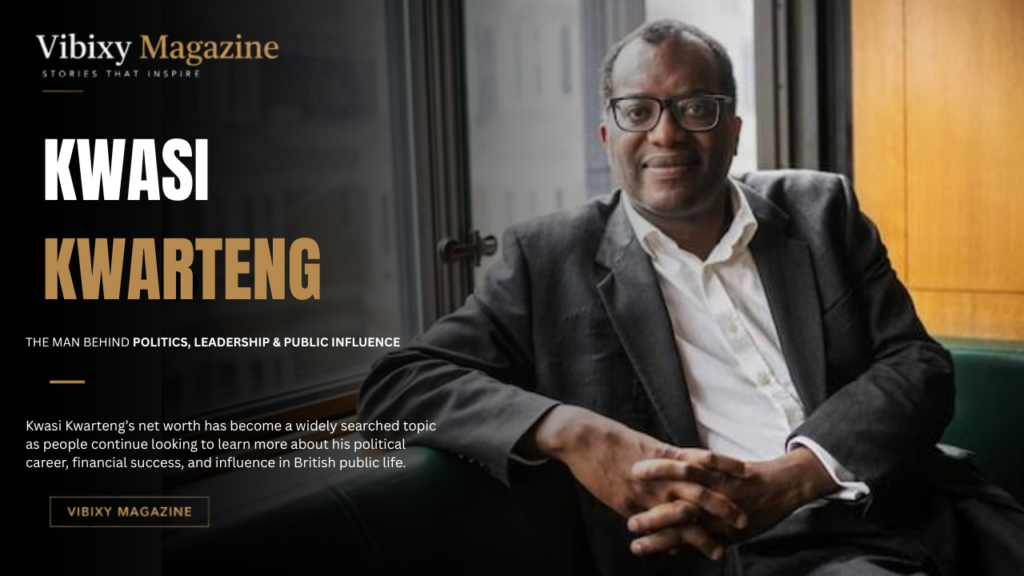
Early Life: A Strong Academic Foundation
Kwasi Kwarteng was born in London on 26 May 1975 to parents who had emigrated from Ghana. Both of his parents were accomplished professionals. His mother worked as a lawyer, while his father was an economist. Growing up in an academically focused household, education played a central role from an early age.
Unlike many political figures whose childhood stories emphasise financial hardship or inherited wealth, Kwarteng’s upbringing reflected professional stability and a strong emphasis on academic achievement. His parents encouraged intellectual curiosity, discipline, and excellence—qualities that would later define his public career.
From an early age, he displayed exceptional academic ability, particularly in history, politics, and literature. Teachers reportedly recognised him as a gifted student long before he entered national politics.
His educational journey would eventually place him among Britain’s most prestigious institutions, shaping both his worldview and future opportunities.
Education That Opened Doors
Education remains one of the defining features of Kwarteng’s biography.
He attended Eton College, one of Britain’s most famous independent schools. Eton has produced numerous prime ministers, cabinet ministers, diplomats, academics, and business leaders over the centuries.
While attendance at Eton often attracts public debate because of its exclusivity, it also provided Kwarteng with access to rigorous academic training and influential networks.
After Eton, he studied history at Trinity College, Cambridge, where he earned high academic honours.
His academic achievements didn’t stop there.
He later attended Harvard University as a Kennedy Scholar, further strengthening his credentials in history and political thought.
He also completed a doctorate focusing on economic and historical subjects, reflecting the intellectual interests that would later shape his books and political philosophy.
Rather than moving directly into politics, Kwarteng spent several years developing expertise in finance, economics, and historical research.
That broader professional experience would eventually contribute to both his reputation and his earning potential.
Career Before Politics
Before entering Parliament, Kwasi Kwarteng built a career that combined finance, research, and writing.
Unlike politicians who spend most of their professional lives within party organisations, Kwarteng accumulated experience in the private sector.
His early career included work as:
- Financial analyst
- Economic researcher
- Journalist and columnist
- Historian
- Author
This diverse background is significant when discussing Kwasi Kwarteng net worth, because politicians often supplement parliamentary salaries through book publishing, consulting, lectures, and media appearances.
His analytical work also helped establish him as one of the Conservative Party’s leading intellectual voices during the late 2000s.
Rather than focusing solely on electoral politics, he developed a reputation for explaining complex economic ideas in accessible language.
That reputation later increased demand for his books and public commentary.
Becoming an Author
Long before becoming Chancellor, Kwarteng had already earned recognition as a published historian and political writer.
His books explored subjects including:
- British imperial history
- Economic development
- Energy policy
- Financial markets
- Political leadership
Among his better-known works are titles examining Britain’s economic evolution and global influence.
While book publishing rarely creates enormous wealth for political authors, successful publications can generate:
- Royalty income
- International editions
- Speaking invitations
- Television appearances
- Academic recognition
For someone like Kwarteng, whose expertise spans economics and history, publishing became both an intellectual pursuit and an additional source of income beyond public office.
Entering Parliament
Kwasi Kwarteng entered the House of Commons after winning election as the Member of Parliament for Spelthorne in 2010.
His arrival coincided with a period of significant economic debate following the global financial crisis.
Within Parliament, he quickly developed a reputation as someone comfortable discussing complex issues such as:
- Taxation
- Energy markets
- Inflation
- Economic growth
- Public spending
- International investment
Unlike politicians known primarily for charismatic speeches, Kwarteng often projected the image of an academic policymaker.
That style appealed to many colleagues who viewed him as one of the Conservative Party’s strongest economic thinkers.
His growing profile eventually led to increasingly senior ministerial appointments.
Career Timeline
| Year | Milestone |
|---|---|
| 1975 | Born in London |
| 1990s | Studied at Eton and Cambridge |
| Early 2000s | Kennedy Scholar at Harvard |
| 2000s | Worked in finance and publishing |
| 2010 | Elected MP for Spelthorne |
| 2019 | Appointed Secretary of State for Business, Energy and Industrial Strategy |
| September 2022 | Became Chancellor of the Exchequer |
| October 2022 | Left office following market turmoil |
| 2024–2026 | Continued public commentary, writing, and political engagement |
Rising Through Government
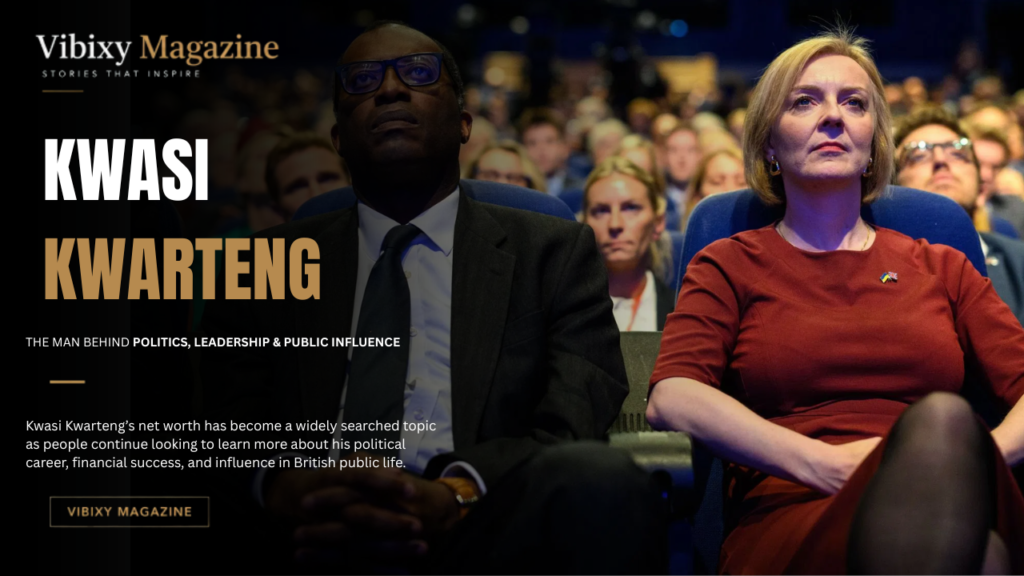
Successive Conservative governments entrusted Kwarteng with increasingly important responsibilities.
He held several ministerial roles before eventually becoming Secretary of State for Business, Energy and Industrial Strategy. In that position, he dealt with major issues affecting energy markets, industrial policy, and Britain’s economic recovery following the COVID-19 pandemic.
These appointments not only raised his public profile but also expanded his experience across different areas of government. His reputation as an economist and historian gave him credibility on policy matters, particularly those related to growth and investment.
By the time he was appointed Chancellor in 2022, Kwarteng had spent more than a decade building a political career that combined academic expertise, ministerial experience, and a strong interest in economic reform.
From Economic Thinker to Chancellor
By the summer of 2022, Kwasi Kwarteng had become one of the Conservative Party’s most recognisable advocates of free-market economics. His long-standing relationship with Prime Minister Liz Truss, combined with their shared belief in tax reform and supply-side growth, positioned him for the government’s most influential financial role.
On 6 September 2022, Kwarteng was appointed Chancellor of the Exchequer, making history as the first Black Chancellor in the United Kingdom.
The appointment was widely viewed as a landmark moment. It also placed him in one of the most demanding jobs in British politics. Every fiscal announcement, market reaction, and economic forecast would now be tied directly to his decisions.
Few could have predicted that his time in office would last just over a month while becoming one of the most intensely analysed periods in modern British economic history.
The Mini-Budget That Changed Everything
Only weeks after taking office, Kwarteng presented what became known as the September 2022 Growth Plan, often referred to by commentators as the “mini-budget.”
The package aimed to stimulate economic growth through a series of significant tax reductions and regulatory reforms.
Some of the headline measures included:
- Reversing the National Insurance increase.
- Cancelling a planned rise in corporation tax.
- Reducing stamp duty.
- Removing the additional 45% income tax rate (a proposal later reversed).
- Expanding investment incentives for businesses.
Supporters argued the plan was designed to encourage investment, entrepreneurship, and long-term growth.
Critics, however, questioned how the measures would be funded, particularly during a period of high inflation, rising interest rates, and global economic uncertainty.
Financial markets reacted sharply.
The value of the pound fell against major currencies, UK government bond yields rose rapidly, and pension funds came under pressure. The Bank of England intervened with temporary measures to stabilise financial markets.
Although economists continue to debate the full causes and scale of the market reaction, the episode became one of the defining moments of Kwarteng’s political career.
A Short but Historic Time at the Treasury
On 14 October 2022, just 38 days after taking office, Kwasi Kwarteng was dismissed as Chancellor.
His tenure remains one of the shortest in British history.
The decision reflected mounting political pressure rather than a single event. Market instability, criticism from opposition parties, concerns within the Conservative Party, and declining public confidence all contributed to the government’s decision to change course.
Despite the brevity of his time at the Treasury, the period continues to be studied by economists, political scientists, and historians because of its lasting impact on discussions surrounding fiscal policy, government borrowing, and investor confidence.
Kwasi Kwarteng Net Worth: What Is Known?
This is the question that brings many readers here, but it’s also the area where accuracy matters most.
Kwasi Kwarteng has never publicly confirmed his personal net worth.
No official government document states the total value of his wealth, assets, savings, or investments.
As a result, any figure circulating online should be treated as an estimate rather than an established fact.
Various media outlets and financial websites have suggested that Kwasi Kwarteng’s net worth may fall within the low seven-figure range, often citing estimates between £1 million and £3 million. These figures are based on public information about his parliamentary earnings, ministerial salaries, book royalties, speaking engagements, and any declared interests. However, none of these estimates has been independently verified by Kwarteng himself.
Readers should therefore distinguish between publicly documented income and speculative net worth calculations.
Understanding How Politicians Build Wealth
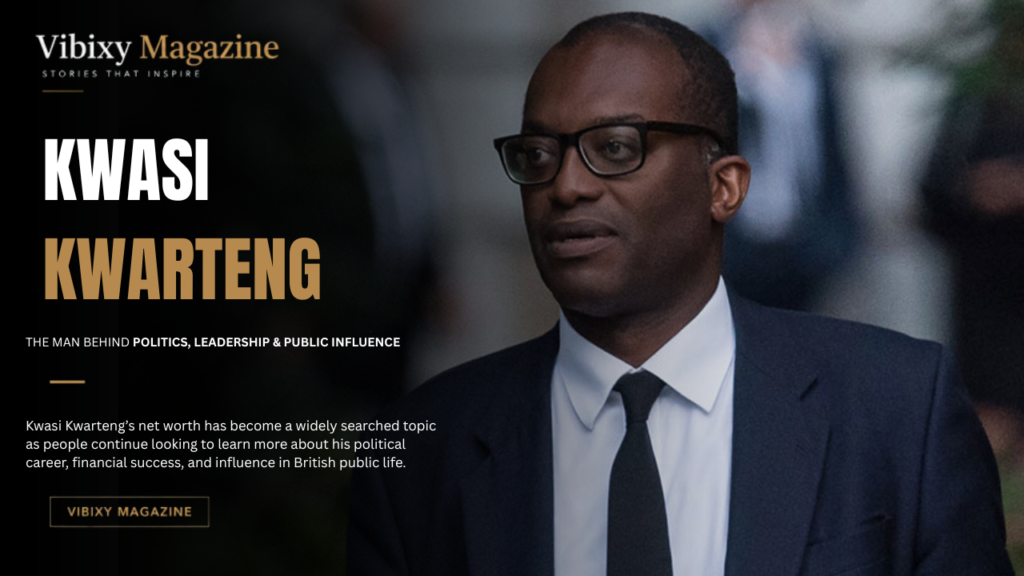
Unlike founders of technology companies or professional athletes, senior politicians rarely derive their wealth from a single source.
Instead, their financial profile often develops gradually through multiple streams over many years.
For someone like Kwasi Kwarteng, potential sources of wealth include:
Parliamentary Salary
As a Member of Parliament, Kwarteng received the standard salary paid to MPs. That income forms the foundation of his public earnings.
Ministerial Salaries
When serving in Cabinet positions, including Business Secretary and later Chancellor, he received additional ministerial remuneration on top of his parliamentary salary.
These salaries are publicly determined rather than privately negotiated.
Book Royalties
Before entering the Treasury, Kwarteng had already established himself as a respected historian and author.
Published books can continue generating income for years through:
- New sales
- Paperback editions
- International publishing rights
- Digital editions
- Library licensing
Although book royalties vary considerably, they often provide politicians with a valuable long-term income stream.
Speaking Engagements
Former ministers frequently receive invitations to speak at:
- Universities
- Economic forums
- Policy conferences
- Corporate events
- International leadership programmes
The fees for these appearances differ depending on the organisation and event, but experienced public figures often command substantial speaking fees after leaving senior government office.
Journalism and Commentary
Kwarteng has also contributed opinion pieces, interviews, and commentary on politics and economics.
These activities may generate additional income while reinforcing his public profile.
Public Registers and Financial Transparency
One reason the public often searches for a politician’s wealth is the assumption that every financial detail is publicly available.
In reality, that isn’t how the British system works.
Members of Parliament are required to declare certain financial interests, gifts, outside earnings, and other registrable interests under parliamentary rules. These registers promote transparency and help identify potential conflicts of interest.
However, they do not provide a complete balance sheet.
They generally do not disclose:
- Personal savings.
- Bank account balances.
- Private investment portfolios.
- Pension values.
- Family assets.
- Total property equity.
- Overall net worth.
As a result, any estimate of Kwasi Kwarteng’s wealth inevitably involves informed assumptions rather than confirmed financial statements.
Did Politics Make Kwasi Kwarteng Wealthy?
The answer is more nuanced than many headlines suggest.
Politics undoubtedly provided Kwarteng with:
- Stable public-sector income.
- Greater visibility.
- Publishing opportunities.
- Invitations to speak internationally.
- Access to influential policy discussions.
However, parliamentary salaries alone are unlikely to create substantial personal wealth in the way that entrepreneurship or private business ownership can.
Instead, politicians who become financially successful often combine years of public service with writing, consulting, academic work, and professional speaking.
Kwarteng’s background as a historian and economist means much of his professional reputation existed before he became Chancellor.
Books That Strengthened His Reputation
Long before millions of people knew his name, Kwarteng had established himself as a serious political author.
His published works explore subjects including:
Economic History
Several books examine Britain’s industrial development, financial systems, and historical economic policy.
Energy Policy
His writing has explored how governments approach energy security, regulation, and long-term investment.
Empire and Global History
As a trained historian, Kwarteng has written about Britain’s imperial past and its continuing influence on politics and economics.
These publications have helped position him as more than simply a career politician.
They also contribute to his professional credibility when appearing at conferences, universities, and public debates.
Property and Investments: What Is Publicly Known?
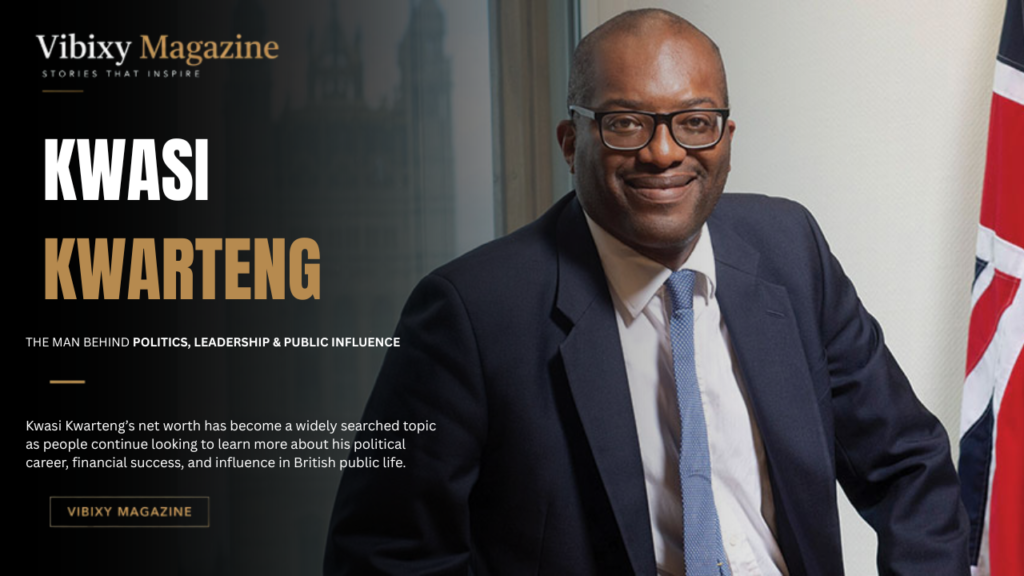
Property ownership is another topic frequently linked to searches for Kwasi Kwarteng net worth.
At present, there is no comprehensive public record detailing his full personal property portfolio or private investment holdings.
Media reports have occasionally discussed residential property connected to his family life, but no verified evidence supports many of the broader claims found on blogs or social media.
Similarly, while politicians may own investments or savings, only interests that meet specific disclosure requirements appear in parliamentary registers.
Consequently, claims that assign precise values to Kwarteng’s real estate or investment portfolio should be viewed with caution unless supported by official documentation.
Personal Life Away from Westminster
Despite years in public office, Kwasi Kwarteng has generally maintained a relatively private family life.
He married Harriet Edwards, a barrister, in 2019. The couple later welcomed a daughter.
Unlike many public figures who regularly share personal moments online, Kwarteng has kept his family largely out of the political spotlight.
That privacy has likely helped shield his personal life from the intense media attention that often accompanies senior government positions.
Friends and colleagues have frequently described him as intellectually curious, well-read, and deeply interested in history beyond day-to-day politics.
Those interests remain evident in his books and public speeches, where historical comparisons often shape his analysis of current events.
Social Media Presence
Kwasi Kwarteng maintains a public presence on social media, although his approach differs from politicians who post continuously throughout the day.
His accounts are primarily used to share:
- Political commentary.
- Economic analysis.
- Public appearances.
- Interviews.
- Parliamentary activity.
- Articles and opinion pieces.
Rather than focusing on personal lifestyle content, his online presence reflects his professional interests and ongoing engagement with public policy.
As political conversations increasingly unfold on digital platforms, his posts continue to attract attention from supporters, critics, journalists, and economists alike.
Public Perception: Admired by Some, Criticised by Others
Few modern British politicians divide opinion quite like Kwasi Kwarteng. Throughout his career, he has attracted praise for his intellectual background, historical knowledge, and willingness to challenge conventional economic thinking. At the same time, critics argue that some of his policy decisions underestimated how quickly financial markets would react.
That contrast has shaped his public image.
Supporters often describe him as a thoughtful economist who was prepared to pursue ambitious reforms rather than incremental change. They point to his academic credentials, published works, and long-standing interest in Britain’s economic history as evidence that his ideas were grounded in a coherent philosophy.
Critics, meanwhile, focus on the market turmoil that followed the 2022 Growth Plan. For many observers, those events overshadowed years of ministerial experience and became the defining chapter of his political career.
This split in public opinion explains why interest in Kwasi Kwarteng net worth remains high. People are often trying to understand not only his financial position but also the broader story of a politician whose decisions had significant economic consequences.
Why People Keep Searching “Kwasi Kwarteng Net Worth”
Search trends show that curiosity about public figures rarely centres on money alone. In Kwarteng’s case, several factors continue to drive interest.
His Time as Chancellor
Holding one of the UK’s highest offices naturally increases public scrutiny. The Chancellor oversees taxation, government spending, and economic policy, making personal finances a topic of public interest.
His Academic Reputation
Unlike many politicians who built careers primarily through party politics, Kwarteng established himself as a historian and author before reaching Cabinet. Readers often wonder how much of his income comes from writing and intellectual work rather than politics.
Continuing Public Commentary
Even after leaving the Treasury, Kwarteng has remained active in interviews, newspaper commentary, policy discussions, and speaking engagements. Continued visibility keeps public curiosity alive.
Media Speculation
Many websites publish precise net worth figures without explaining how those numbers were calculated. Readers searching for reliable information often look for balanced reporting that distinguishes verified facts from estimates.
Cultural and Political Significance
Kwasi Kwarteng occupies a distinctive place in contemporary British politics.
His appointment as the United Kingdom’s first Black Chancellor marked an important milestone in the country’s political history. Regardless of political affiliation, that achievement carries historical significance.
His career also reflects broader debates about merit, education, diversity, and opportunity in British public life.
Beyond questions of representation, Kwarteng has contributed to discussions on:
- Free-market economics
- Energy security
- Industrial policy
- Tax reform
- Britain’s economic competitiveness
- Historical perspectives on government
Whether readers agree with his conclusions or not, his ideas have influenced political debate far beyond his brief tenure at the Treasury.
Interesting Facts About Kwasi Kwarteng
While much of the public discussion focuses on politics, several lesser-known details help paint a fuller picture of his background and interests.
1. His First Name Has Cultural Meaning
“Kwasi” is a traditional Ghanaian name commonly given to boys born on a Sunday. It reflects his family’s Ghanaian heritage and cultural roots.
2. He Won Prestigious Academic Awards
Throughout his education, Kwarteng earned recognition for outstanding academic performance, particularly in classics and history.
3. He Is a Published Historian
Long before becoming Chancellor, he had already written extensively on British history, empire, economics, and public policy.
4. He Worked Outside Politics
Unlike some career politicians, Kwarteng spent time in finance and journalism before entering Parliament, giving him experience beyond Westminster.
5. His Time as Chancellor Was Exceptionally Short
His 38-day tenure remains one of the shortest in the history of the office, making it a notable chapter in British political history.
6. He Has Served in Multiple Senior Government Roles
Before becoming Chancellor, he held several ministerial positions, including Secretary of State for Business, Energy and Industrial Strategy.
Public Income vs. Personal Wealth
One of the biggest misconceptions surrounding politicians is that a high-profile office automatically translates into great personal wealth.
In reality, public office provides a salary, but salary is only one part of net worth.
Net worth generally includes:
- Savings
- Investments
- Property equity
- Pension assets
- Business interests
- Other financial holdings
- Outstanding liabilities
Because much of this information remains private, no responsible journalist can state Kwasi Kwarteng’s exact net worth as fact.
The most balanced conclusion is that he has built a financially successful professional career through politics, writing, and public engagement, but the precise value of his personal wealth has not been officially disclosed.
Timeline of Major Career Milestones
| Year | Event | Why It Matters |
|---|---|---|
| 1975 | Born in London | Beginning of his life and career |
| 1990s | Educated at Eton College and Trinity College, Cambridge | Established a strong academic foundation |
| Early 2000s | Kennedy Scholar at Harvard University | Expanded his international academic credentials |
| 2000s | Worked in finance, journalism, and writing | Built experience before politics |
| 2010 | Elected MP for Spelthorne | Entered Parliament |
| 2019 | Appointed Business Secretary | Joined the Cabinet |
| September 2022 | Became Chancellor of the Exchequer | First Black Chancellor in UK history |
| October 2022 | Left office after 38 days | One of the shortest-serving Chancellors |
| 2023–2026 | Continued writing, speaking, and political commentary | Remained active in public debate |
What Could Influence Kwasi Kwarteng’s Future Net Worth?
Although predicting future wealth is impossible, several factors could influence Kwarteng’s financial position over the coming years.
Publishing More Books
Political memoirs and books analysing economic policy often attract strong readership, particularly from those interested in contemporary British politics.
Paid Speaking Engagements
Former Cabinet ministers are frequently invited to address universities, business conferences, policy institutes, and international forums.
Consultancy or Advisory Roles
Many former senior politicians later advise businesses, investment firms, think tanks, or non-profit organisations, subject to applicable rules and transparency requirements.
Media and Broadcasting
Television appearances, newspaper columns, podcasts, and documentary projects can provide additional professional opportunities while keeping public figures relevant.
Return to Frontline Politics
If Kwarteng were to hold another senior public office in the future, public interest in both his career and financial profile would likely increase again.
Common Misconceptions About Kwasi Kwarteng’s Wealth
“His net worth is officially published.”
No. There is no official government statement confirming his total personal net worth.
“Every website reports the same figure.”
False. Estimates vary widely because they rely on different assumptions rather than verified financial disclosures.
“His salary as Chancellor made him a millionaire.”
Not necessarily. Ministerial salaries contribute to income, but net worth depends on total assets, investments, liabilities, and long-term financial decisions.
“All of his assets are public.”
No. Parliamentary registers disclose certain financial interests and outside earnings where required, but they do not provide a complete inventory of an individual’s wealth.
Frequently Asked Questions About Kwasi Kwarteng Net Worth
What is Kwasi Kwarteng’s net worth?
Kwasi Kwarteng has not publicly disclosed his exact net worth. While several websites estimate it to be in the low seven figures, no official source has confirmed a precise amount. Readers should treat published estimates as informed speculation rather than verified fact.
How does Kwasi Kwarteng earn money?
His income has come from several sources over the course of his career, including his parliamentary salary, ministerial roles, book royalties, writing, media commentary, and speaking engagements. Any additional private investments are not fully disclosed publicly.
Was Kwasi Kwarteng a successful author before becoming Chancellor?
Yes. Before reaching one of the highest offices in government, Kwarteng had already established himself as a respected historian and author. His books on British history, economics, and public policy contributed to his reputation as an intellectual voice within the Conservative Party.
Why did interest in Kwasi Kwarteng’s wealth increase?
Search interest rose sharply following his appointment as Chancellor in September 2022 and the economic events surrounding the Growth Plan. As public scrutiny intensified, many people became interested in his professional background, career earnings, and financial profile.
Is Kwasi Kwarteng still involved in politics?
Following his departure from the Treasury, he remained active in political discussion through commentary, interviews, and writing. His long-term political role depends on future developments within British politics.
Does Kwasi Kwarteng have social media accounts?
Yes. He maintains public social media profiles where he shares commentary on politics, economics, interviews, and public engagements. His online presence is primarily professional rather than personal.
Final Thoughts on Kwasi Kwarteng Net Worth
The search for Kwasi Kwarteng net worth reflects more than curiosity about a politician’s bank balance. It reflects public interest in the career of a figure who moved from elite academic institutions to the centre of British government, experienced a historic appointment, and became closely associated with one of the most debated periods in recent UK economic policy.
What can be stated with confidence is that Kwarteng has built a distinguished career across politics, academia, journalism, and publishing. What cannot be stated as fact is his precise personal wealth, because he has never publicly confirmed it and official records do not provide a complete financial picture.
As with many prominent public figures, separating verified information from online speculation is essential. Looking at documented career achievements, declared interests, and publicly available information provides a far more reliable understanding than relying on unsupported estimates.
Whether history ultimately remembers Kwasi Kwarteng for his scholarship, his economic ideas, or his brief but consequential period as Chancellor, his influence on modern British political debate is likely to remain a subject of discussion for years to come.