
When people search for Robert Plaster net worth, they usually expect a single number. The internet certainly provides plenty of them—$500 million, $1.3 billion, even $5 billion. The problem is that these figures are repeated far more confidently than they are documented.
Robert W. Plaster was not a rapper, recording artist, or social-media celebrity. He was a Missouri businessman, entrepreneur, investor, and philanthropist whose fortune was built largely through Empire Gas Corporation and later business interests. He died in 2008, so any modern “net worth” figure attached to his name needs to be treated as an estimate rather than a verified current balance sheet. His obituary confirms that he was born September 3, 1930, and died October 11, 2008, at age 78.
What can be documented is more interesting than an inflated internet estimate. Plaster founded Empire Gas in 1963, eventually built it into a major propane distribution company, and was involved in its leadership until 1996. He later pursued investments and became particularly well known in southwest Missouri for philanthropy and support of higher education.
So, what was Robert Plaster actually worth?
The honest answer is that no authoritative public source establishes a definitive personal net worth at the time of his death. However, the scale of his business transactions, investments, property, and philanthropic foundation makes one thing clear: he was a very wealthy American entrepreneur.
Robert Plaster Net Worth: What Can Actually Be Verified?
The first distinction to make is between documented financial facts and internet estimates.
Several websites currently publish a Robert Plaster net worth of $5 billion or other extremely large figures. Those claims are difficult to reconcile with reliable historical documentation. One site, for example, gives a $5 billion figure while another says his wealth at death was somewhere between $50 million and $200 million. Yet neither figure is supported by a publicly available personal financial statement.
That matters because net worth is not the same thing as the value of a company once owned, the asking price of a property, or the assets held by a family foundation.
A more responsible description is that Robert Plaster was a multimillionaire whose exact personal net worth has not been publicly established.
His wealth was tied to decades of entrepreneurship, ownership interests, investments, real estate, and the eventual sale of Empire Gas. The available evidence supports substantial wealth, but it doesn’t justify presenting an unsupported $5 billion figure as fact.
Robert Plaster Biography at a Glance
| Category | Details |
|---|---|
| Full name | Robert Wayne Plaster |
| Born | September 3, 1930 |
| Birthplace | Kansas City, Missouri |
| Raised in | Neosho, Missouri area |
| Died | October 11, 2008 |
| Age at death | 78 |
| Profession | Businessman, entrepreneur, investor, philanthropist |
| Best known for | Founding Empire Gas Corporation |
| Major later interest | Evergreen Investments |
| Wife | Mary Jean Richards Plaster |
| Children | Four |
| Major philanthropic focus | Education and free enterprise |
| Foundation | Robert W. Plaster Foundation |
| Signature legacy | Educational buildings, scholarships, business and athletics facilities |
The biographical details above are supported by his funeral-home obituary and Southwest Baptist University’s Hall of Fame profile.
Who Was Robert W. Plaster?
Robert W. Plaster was a businessman from Lebanon, Missouri, whose career unfolded during a period when regional entrepreneurs could build remarkably durable companies from relatively modest beginnings.
Southwest Baptist University’s Hall of Fame describes him as a businessman and civic leader from Lebanon, Missouri. The university also records that he founded Empire Gas Corporation in 1963 and served as its chairman until 1996. He subsequently became associated with Evergreen Investments.
That career is important because Plaster’s story isn’t really about celebrity wealth. There was no Hollywood career, record label, championship contract, or influencer brand behind his fortune.
His wealth came from owning and operating businesses.
That difference explains why so many modern searches about him can feel confusing. Search engines sometimes place his name alongside celebrity-style “net worth” pages, but the underlying story is a classic American business biography.
Early Life and the Environment That Shaped Him
Robert Wayne Plaster was born in Kansas City, Missouri, on September 3, 1930, and was raised in the Neosho area. His childhood coincided with the Great Depression, an era that shaped an entire generation’s attitudes toward money, work, risk, and security.
His later biography reflects a practical rather than glamorous beginning. He graduated from Neosho High School and attended college, although his formal education did not become the centerpiece of his career. His obituary records that he attended Missouri Southern State University, while Southwest Baptist University later recognized his broader contributions to education and civic life.
There is a revealing contrast in Plaster’s story.
He became a major benefactor of universities despite not building his own reputation around an elite academic pedigree. Instead, education became one of the causes to which he devoted significant resources after becoming successful.
That would eventually become one of the defining themes of his legacy.
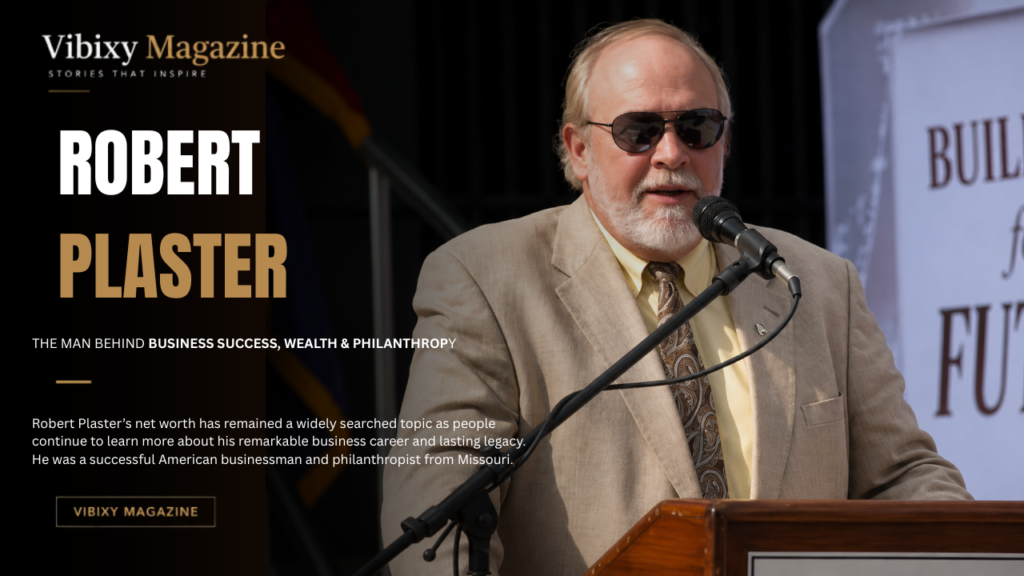
The Beginning of Empire Gas
The pivotal year in Robert Plaster’s career was 1963.
That was when he founded Empire Gas Corporation in Lebanon, Missouri. Southwest Baptist University’s official biography confirms the founding date and notes that he remained chairman until 1996.
Empire Gas operated in propane distribution, an industry that may sound relatively unglamorous compared with technology or entertainment but can generate substantial business value when operations reach scale.
Propane is a practical commodity. Homes, farms, businesses, and industrial customers need energy regardless of whether the economy is fashionable or unfashionable. Building distribution infrastructure, customer relationships, storage capabilities, transportation systems, and regional market share can therefore create a durable business.
Plaster’s success came from understanding that kind of business.
He wasn’t selling an image. He was building an operating company.
Why Empire Gas Became So Important to His Wealth
Empire Gas eventually grew far beyond the small regional operation Plaster started in the 1960s.
The company became publicly traded, and historical reporting shows that Empire Gas was active in corporate expansion and acquisitions during the 1970s. A 1977 Washington Post report, for example, identified Robert Plaster as chairman while covering Empire Gas’s attempted tender offer for Pargas.
That gives useful context to his position in the industry.
By the 1970s, Plaster was no longer simply a local businessman. He was running a company capable of participating in major corporate transactions.
That type of growth is central to understanding Robert Plaster net worth. His fortune wasn’t created overnight. It developed through ownership, corporate expansion, management, and eventually the monetization of the business he had spent decades building.
The $120 Million Empire Gas Transaction
One of the most frequently cited numbers in Robert Plaster’s financial story is $120 million.
Historical accounts report that Empire Gas ultimately changed hands in 1996, with Northwestern Public Service acquiring the company for $120 million. KY3 and other reports about Plaster’s later estate and properties also identify him as the founder of Empire Gas.
But there’s a critical distinction here:
A $120 million company sale does not mean Robert Plaster personally received $120 million.
Corporate transaction values can include the value of the entire business, debt, other shareholders’ interests, transaction structures, and various obligations. Without the complete ownership and transaction documents, it would be misleading to turn the $120 million sale price directly into Plaster’s personal net worth.
Still, the transaction demonstrates the enormous scale of the company he helped create.
It also explains why estimates of his wealth began appearing in the millions rather than merely hundreds of thousands.
What Happened After Empire Gas?
Selling or stepping away from a major business doesn’t necessarily mean an entrepreneur retires.
Plaster continued his involvement in business and investment activities. Southwest Baptist University’s Hall of Fame identifies him as chairman of Evergreen Investments after his Empire Gas career.
This second chapter is easy to overlook.
For entrepreneurs, the first major business often becomes the source of capital for a broader investment strategy. Instead of depending on one operating company, wealth can be distributed across property, investments, financial assets, and other ventures.
That appears to be an important part of Plaster’s later financial life.
It also makes calculating his exact net worth particularly difficult. Once wealth moves from a single operating business into multiple private investments, there is rarely a clean public figure available.
The Evergreen Crystal Palace and His Extraordinary Property
Few things illustrate the scale of Robert Plaster’s wealth better than the property commonly known as the Evergreen Crystal Palace.
The enormous estate overlooking Table Rock Lake in Missouri was built for Plaster in the 1990s. KY3 reported that the property contained roughly 30,000 square feet and included features such as a large garage, multiple bedrooms, a helicopter pad, and an indoor shooting range.
When the estate was publicly listed in 2021, the asking price was reported at approximately $80 million. The Kansas City Star described the property as nearly 25,000 square feet on more than 350 acres and reported that the sale was intended to benefit college funds for students.
That last detail is particularly telling.
The estate was spectacular, but its later connection to educational funding shows how Plaster’s personal wealth eventually became part of a broader philanthropic legacy.
The property’s market value also shouldn’t be confused with Robert Plaster’s net worth. An asking price is not necessarily a final sale price, and a property owned by an investment entity is not automatically an individual’s personal asset.
Still, it provides a tangible sense of the financial world in which Plaster operated.
Robert Plaster’s Philanthropy Was Bigger Than His Wealth Estimates
If the net-worth conversation is reduced to dollars, something important gets lost.
Robert Plaster became especially influential through philanthropy.
Southwest Baptist University’s Hall of Fame profile lists numerous educational and athletic projects connected to his support, including Plaster Stadium, the Plaster Guest Lodge, the Mellers Conference Center, and the Taylor Free Enterprise Building. It also notes his involvement with Central Methodist, College of the Ozarks, and the foundation associated with Southwest Missouri State University.
Missouri State University continues to list the Robert W. Plaster Center for Free Enterprise and Business Development, the Robert W. Plaster Sports Complex, and the Robert W. Plaster Student Union among its named facilities and funds.
The pattern is unmistakable.
Plaster didn’t simply donate to one favorite institution. He developed a long-running interest in education, entrepreneurship, athletics, and free-enterprise programs.
The Robert W. Plaster Foundation
The foundation bearing his name continues to provide perhaps the clearest public window into the financial legacy connected with him.
According to the most recent IRS-derived data reported by ProPublica, the Robert W. Plaster Foundation had approximately $73.57 million in net assets at the end of fiscal year 2024. It reported roughly $4.53 million in revenue and $4.61 million in expenses for that year.
Those numbers are significant, but they must be interpreted correctly.
The foundation’s assets are not Robert Plaster’s personal net worth.
A private foundation is a separate legal entity. Its assets cannot simply be added to the founder’s personal fortune. In fact, using the foundation’s current assets as evidence that Plaster personally had $73 million—or $500 million or $5 billion—would be financially inaccurate.
What the foundation does show is that the philanthropic structure associated with Plaster remains financially substantial decades after his death.
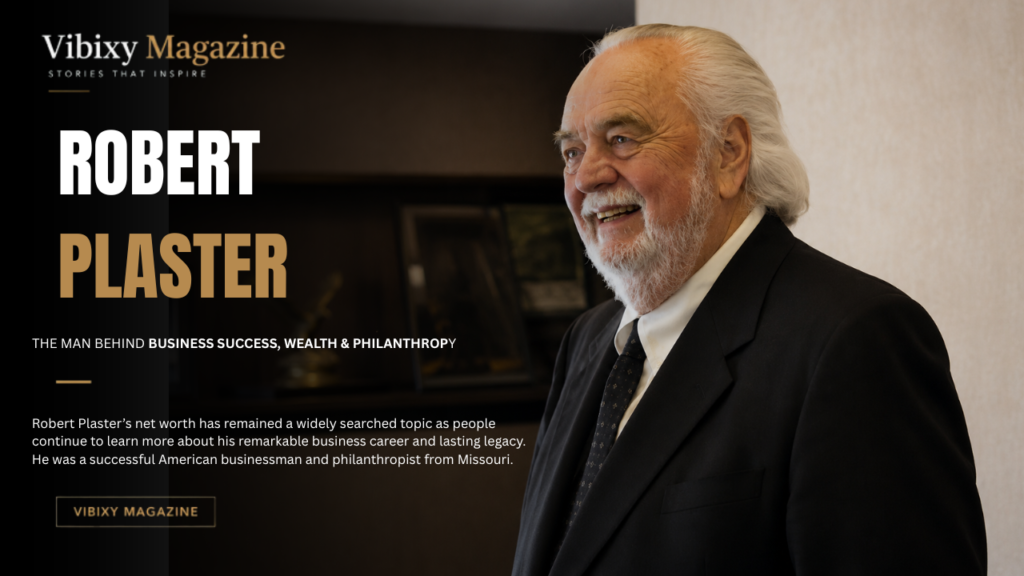
Robert Plaster Age: How Old Was He When He Died?
Robert Plaster was born on September 3, 1930, and died on October 11, 2008.
His obituary states that he was 78 years, one month, and eight days old when he died.
That makes the answer to the frequently searched “Robert Plaster age” question straightforward:
Robert W. Plaster was 78 years old at the time of his death.
Some websites have incorrectly listed different ages, sometimes because they use unreliable public-record data belonging to other people named Robert Plaster. Search results show numerous unrelated individuals with the same name, which is another reason biographical identification matters.
The Missouri businessman should not be confused with those individuals.
Robert Plaster’s Personal Life and Family
Robert Plaster married Mary Jean Richards on February 14, 1951. His obituary states that they had four children: one son and three daughters.
The children identified in the obituary are Stephen Plaster, Cheryl Plaster Schaefer, Tammy Plaster Brown, and Dolly Plaster Clement. The same obituary also records nine grandchildren and one great-grandchild at the time.
Unlike many modern celebrity wealth stories, Plaster’s private life wasn’t heavily documented through entertainment media.
That matters when evaluating online claims.
There simply isn’t the same volume of interviews, television appearances, social posts, financial disclosures, and celebrity reporting that exists for a musician or actor. Much of what survives about Plaster comes from institutional biographies, local reporting, business history, obituaries, foundation records, and the physical buildings that carry his name.
Was Robert Plaster a Musician or Rapper?
No reliable evidence supports that characterization.
This is one of the most important corrections for anyone researching the keyword.
Robert W. Plaster was a businessman and philanthropist, not a hip-hop artist. Southwest Baptist University explicitly identifies him as a businessman and civic leader, and his obituary describes his career around Empire Gas and his community involvement.
There are unrelated people with the surname Plaster and many people named Robert Plaster, so search engines can create confusing associations. But the Robert Plaster connected with Empire Gas, Evergreen Investments, and southwest Missouri philanthropy was not known for a music career.
Robert Plaster’s Music Style and Influence
There is therefore no documented “Robert Plaster music style” or hip-hop catalog to analyze.
This distinction may sound obvious, but it matters because some biography pages automatically apply celebrity-style sections—music genre, albums, songs, social followers, endorsements—to names that don’t belong to entertainment figures.
For Robert Plaster, those sections would be misleading.
His influence was primarily entrepreneurial, economic, educational, and philanthropic.
Did Robert Plaster Have Social Media?
No verified social-media presence belonging to the late Robert W. Plaster should be treated as authoritative.
He died in 2008, before platforms such as Instagram and TikTok became central parts of public identity. More importantly, his public legacy is institutional rather than influencer-based.
Today, his name appears through universities, charitable organizations, historical coverage, real-estate stories, and foundation records rather than through a personal social-media feed.
That is another clue that this is a business-history story rather than a celebrity-profile story.
Why Is Robert Plaster Net Worth Such a Popular Search?
The exact reasons behind individual searches aren’t publicly available, so it would be irresponsible to claim that the keyword is definitively “trending” without credible search-volume data.
But there are several understandable reasons people become curious about him.
First, the Evergreen Crystal Palace attracts attention whenever its unusual architecture or multimillion-dollar listing resurfaces. The 2021 $80 million listing generated substantial media coverage.
Second, the $120 million Empire Gas transaction provides a striking headline number.
Third, the continuing presence of the Robert W. Plaster Foundation and the many buildings carrying his name keeps his story visible.
And finally, internet users are naturally curious about the person behind a spectacular estate or a large philanthropic foundation.
That combination can create recurring searches for “Robert Plaster net worth,” even though the available evidence doesn’t support a precise figure.
A Timeline of Robert Plaster’s Life and Career
| Year | Event |
|---|---|
| 1930 | Robert Wayne Plaster is born in Kansas City, Missouri |
| 1951 | Marries Mary Jean Richards |
| 1963 | Founds Empire Gas Corporation |
| 1970s | Empire Gas expands and becomes involved in major corporate activity |
| 1980s–1990s | Plaster’s business and philanthropic influence grows |
| 1990s | Evergreen Crystal Palace is built near Table Rock Lake |
| 1996 | Empire Gas era ends as the company changes ownership |
| 1999 | Robert W. Plaster is inducted into SBU Athletics Hall of Fame |
| 2008 | Robert Plaster dies at age 78 |
| 2021 | Evergreen estate receives major media attention with an $80 million listing |
| 2024 | Robert W. Plaster Foundation reports approximately $73.5 million in net assets |
The 1999 recognition and Empire Gas career details come from Southwest Baptist University; the death date and family information come from the obituary; the 2021 property figure comes from contemporary reporting; and the foundation’s 2024 financial information comes from IRS-derived nonprofit records.
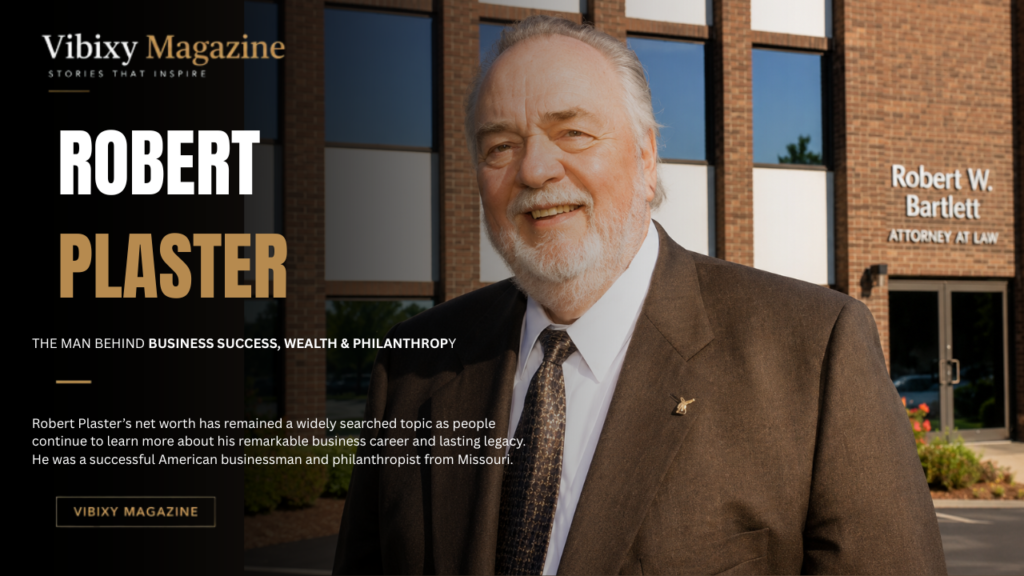
Interesting Facts About Robert Plaster
One of the most interesting things about Plaster is how little his public image resembles the modern idea of a wealthy entrepreneur.
He wasn’t a household celebrity.
He built a propane business.
He invested in education.
He supported institutions in the region where he lived.
And decades after his death, his name remains attached to university buildings and philanthropic programs.
Another fascinating detail is the scale of the Evergreen property. A house approaching 25,000–30,000 square feet with a helicopter pad and enormous garage is unusual anywhere, let alone in the Missouri Ozarks.
Yet perhaps the more meaningful fact is what happened to the estate later: reporting on its 2021 sale noted that the property was being positioned to support college funding.
That turns a luxury-property story into something more complicated—a story about wealth being converted into opportunity.
What Was Robert Plaster’s Main Source of Wealth?
The strongest evidence points to Empire Gas Corporation as the foundation of his fortune.
His later involvement with Evergreen Investments and other investments likely broadened the sources of his wealth, but the public record does not provide a complete personal balance sheet.
A simplified picture looks like this:
Empire Gas → business growth → corporate transaction → capital for investments → philanthropy and estate assets
That is a much more credible framework than claiming that one website’s net-worth number represents a verified fortune.
His story also illustrates why private wealth is difficult to calculate. Business ownership percentages, investment holdings, real estate, trusts, family transfers, liabilities, and estate planning can all change the final number dramatically.
So, Was Robert Plaster a Billionaire?
There is not enough reliable evidence to state that Robert W. Plaster was a billionaire.
Some websites now call him a billionaire and even assign figures of $5 billion or more. Those claims should be treated as unverified estimates, not established facts.
The documented evidence tells a different story: a highly successful businessman who built and sold a major company, accumulated substantial wealth, owned valuable assets, and established a philanthropic legacy that continues to hold significant assets.
That is already an extraordinary financial story.
There is no need to exaggerate it.
Robert Plaster’s Cultural Relevance Today
Plaster’s relevance isn’t rooted in pop culture. It comes from the way his story intersects with a distinctly American idea of entrepreneurship.
He represents a generation of business owners who built regional companies before the internet, private-equity boom, and social-media economy changed how entrepreneurs were perceived.
His legacy also demonstrates the power of naming and place.
Walk around institutions in southwest Missouri and the Plaster name appears repeatedly. A stadium, student union, free-enterprise center, athletic facilities, and foundation connect his personal success to public institutions.
That kind of legacy can outlive a bank account.
Money changes hands. Companies are sold. Property values rise and fall.
Buildings remain.
Scholarships continue.
And a family foundation can keep distributing resources long after its founder is gone.
What Does Robert Plaster’s Legacy Look Like in 2026?
As of 2026, the most measurable part of Plaster’s continuing legacy is philanthropic.
The Robert W. Plaster Foundation reported roughly $73.5 million in net assets for fiscal 2024, while distributing millions toward charitable purposes. ProPublica’s IRS-derived data shows more than $4.1 million in charitable disbursements during that fiscal year.
The foundation’s grant history also demonstrates a continuing emphasis on education. Its reported grants have supported universities and educational organizations across several states.
That makes Plaster’s story somewhat unusual.
His business empire changed.
His personal life ended.
But the philanthropic machinery associated with his name continued working.
What Could Have Happened to His Wealth After His Death?
Because Plaster died in 2008, it is more accurate to discuss his estate and legacy than a current personal net worth.
His wealth would have been subject to estate planning, family ownership structures, investment decisions, charitable transfers, property transactions, and other financial arrangements. Public nonprofit filings provide information about the foundation, but they don’t reveal the full value of the family’s private assets.
This is where many online articles go wrong.
They take today’s value of an asset, combine it with historical company values, add foundation assets, and then label the total “Robert Plaster net worth.”
That’s not how professional wealth analysis works.
Without a complete estate inventory, the exact number remains unknown.
Frequently Asked Questions About Robert Plaster Net Worth
What was Robert Plaster’s net worth?
Robert W. Plaster’s exact personal net worth has not been reliably documented in a primary public source. Online estimates range widely, including claims of hundreds of millions or several billion dollars, but those figures should not be treated as verified. The strongest evidence establishes that he was a wealthy entrepreneur whose fortune grew from Empire Gas and later investments.
How did Robert Plaster make his money?
His primary documented business achievement was founding Empire Gas Corporation in 1963. He served as chairman until 1996 and later became associated with Evergreen Investments.
Was Robert Plaster a billionaire?
There is no reliable public documentation establishing that Robert W. Plaster was a billionaire. Several websites claim billionaire-level wealth, but those estimates aren’t supported by a disclosed personal balance sheet.
How much did Empire Gas sell for?
Historical reports indicate that Empire Gas was ultimately acquired for approximately $120 million in 1996. That amount represents the reported transaction value of the company, not necessarily Robert Plaster’s personal proceeds.
How old was Robert Plaster when he died?
Robert W. Plaster was 78 years old when he died on October 11, 2008. His obituary gives his birth date as September 3, 1930.
Who was Robert Plaster’s wife?
He married Mary Jean Richards on February 14, 1951. The couple had four children.
Did Robert Plaster have children?
Yes. His obituary identifies four children: Stephen Plaster, Cheryl Plaster Schaefer, Tammy Plaster Brown, and Dolly Plaster Clement.
What is the Robert W. Plaster Foundation worth?
According to IRS-derived nonprofit data, the Robert W. Plaster Foundation reported approximately $73.53 million in net assets for fiscal year 2024. Those assets belong to the foundation and should not be confused with Robert Plaster’s personal wealth.
What was the Evergreen Crystal Palace?
The Evergreen Crystal Palace is a huge Missouri estate associated with Robert Plaster. Built in the 1990s above Table Rock Lake, the property became famous for its unusual size and luxury features. In 2021 it was publicly listed for approximately $80 million.
Was Robert Plaster a musician?
No. The Robert W. Plaster connected with Empire Gas was a businessman, investor, and philanthropist. There is no credible evidence that he was a rapper or professional recording artist.
Did Robert Plaster have social media accounts?
There is no verified personal social-media presence that should be considered authoritative for Robert W. Plaster. His public legacy is primarily documented through businesses, universities, foundations, historical reporting, and charitable institutions.
Why are Robert Plaster net worth estimates so different?
The main reason is that his personal financial records aren’t publicly available in the way those of a public-company executive or publicly ranked billionaire might be. Websites also frequently confuse company value, property value, foundation assets, and personal wealth. Those are separate categories and shouldn’t simply be added together.
Suggested Image Alt Texts
- Robert W. Plaster portrait, Missouri businessman and philanthropist
- Robert Plaster founder of Empire Gas Corporation
- Robert W. Plaster historical photograph
- Evergreen Crystal Palace overlooking Table Rock Lake
- Evergreen Crystal Palace Missouri estate associated with Robert Plaster
- Robert W. Plaster Foundation building or charitable legacy
- Robert Plaster business and philanthropic legacy in Missouri
- Robert W. Plaster named facilities at Missouri universities
- Empire Gas Corporation founder Robert Plaster
- Table Rock Lake estate built for Robert Plaster
Final Takeaway on Robert Plaster Net Worth
The most compelling thing about Robert Plaster net worth isn’t a flashy billionaire number.
It’s the fact that the exact number remains uncertain while the evidence of his accomplishments is remarkably concrete.
There is an actual company he founded. There is a documented $120 million corporate transaction connected to Empire Gas. There is an extraordinary Missouri estate that once carried an $80 million asking price. There are universities, athletic facilities, free-enterprise programs, and a foundation that still carry his name.
Those facts tell a richer story than an unsupported estimate ever could.
Robert W. Plaster came from the generation that understood wealth less as a public identity and more as something built quietly—through ownership, persistence, calculated risk, and years of work. His fortune grew from propane distribution and business rather than celebrity. And when he had accumulated enough to make a difference, education became one of the places where he chose to put that wealth to work.
So if you’re looking for one definitive number, the responsible answer is unknown. If you’re looking for evidence of substantial wealth, the record leaves little doubt.
And perhaps that’s the more enduring measure of Robert Plaster’s financial legacy: not simply what he was worth when he died, but what continued to be worth something because he lived.